

3
Set 11389 is based on the movie Project Hail Mary, itself adapted from Project Hail Mary by Andy Weir — a science-fiction story [although some people argue the movie isn’t “science” enough].
Sure, films play by their own rules, but in my opinion there’s still plenty of science in it. And besides, much like the book, it’s ultimately a beautiful buddy story.
2
LEGO clearly took the STEM aspect of Ryland Grace and Rocky’s story very seriously, because this set is extremely technical — literally. Most of the build relies heavily on Technic elements, so you constantly have to pay attention to all those pins, gears, and axles, and exactly where they’re supposed to go.
Let’s just say that even though I focused intensely during the build and didn’t make a single mistake, by the time I finished the base I could barely feel my fingertips anymore.
1
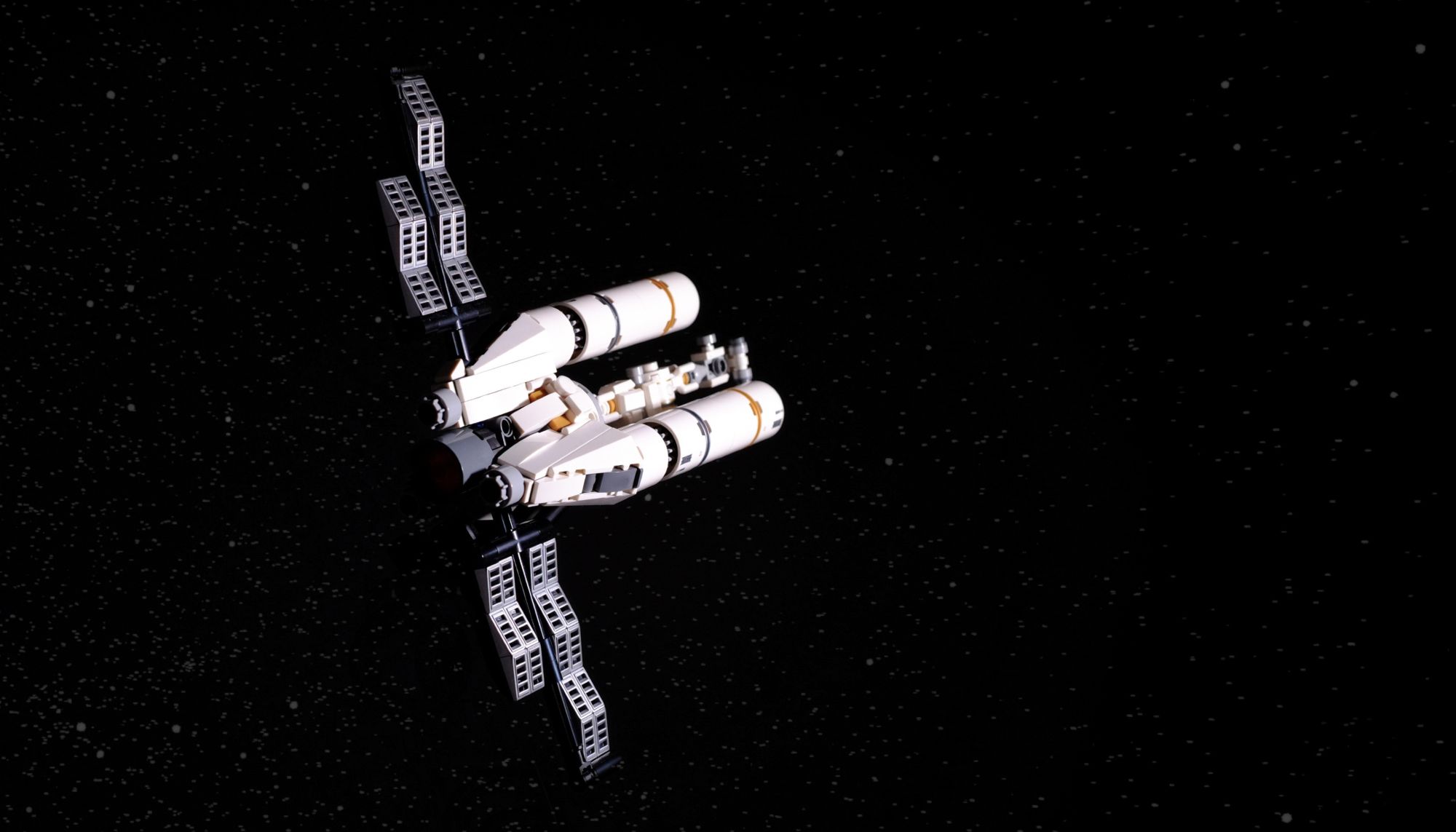
That said, building the ship itself was a genuine pleasure. This is my first micro-scale model, so it was a really interesting experience [especially compared to assembling the base!]. I also love the ship’s design — it feels like a natural extrapolation of the ISS if humanity ever decided to turn it into an interstellar vehicle.
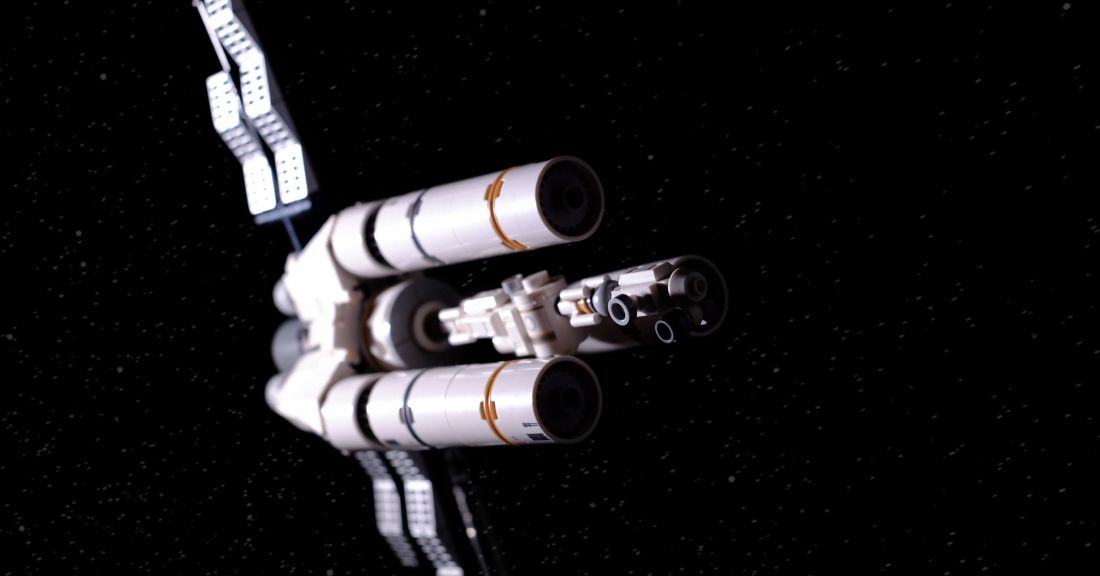
Neither the book nor the movie spends much time obsessing over the ship’s engineering, so I’ll stay faithful to the source material and avoid diving too deep into that myself. I’ll just say this: once you finish the build, mount the ship onto the base, and start turning the crank, that’s the perfect moment to put on The Blue Danube by Johann Strauss II. Suddenly all the effort poured into building the base feels absolutely worth it — the ship gracefully dances in motion, almost like the spacecraft from 2001: A Space Odyssey. At that point, even the word centrifuge starts sounding like some kind of musical term.
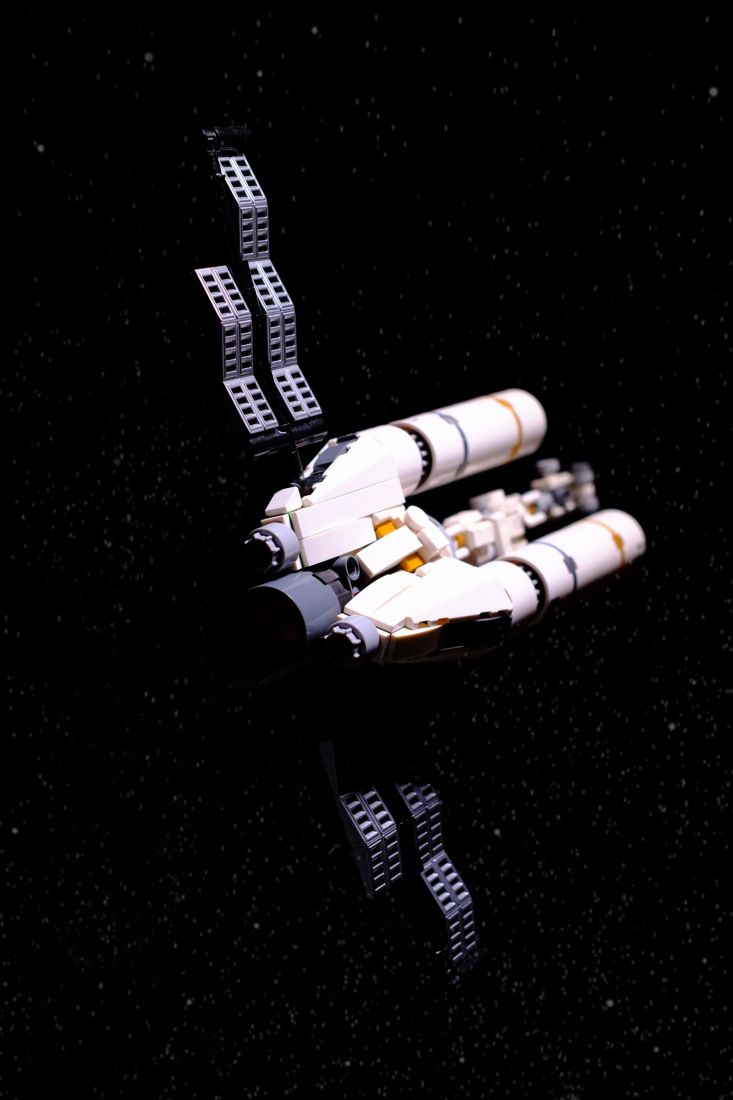
Project Hail Mary – lift off!
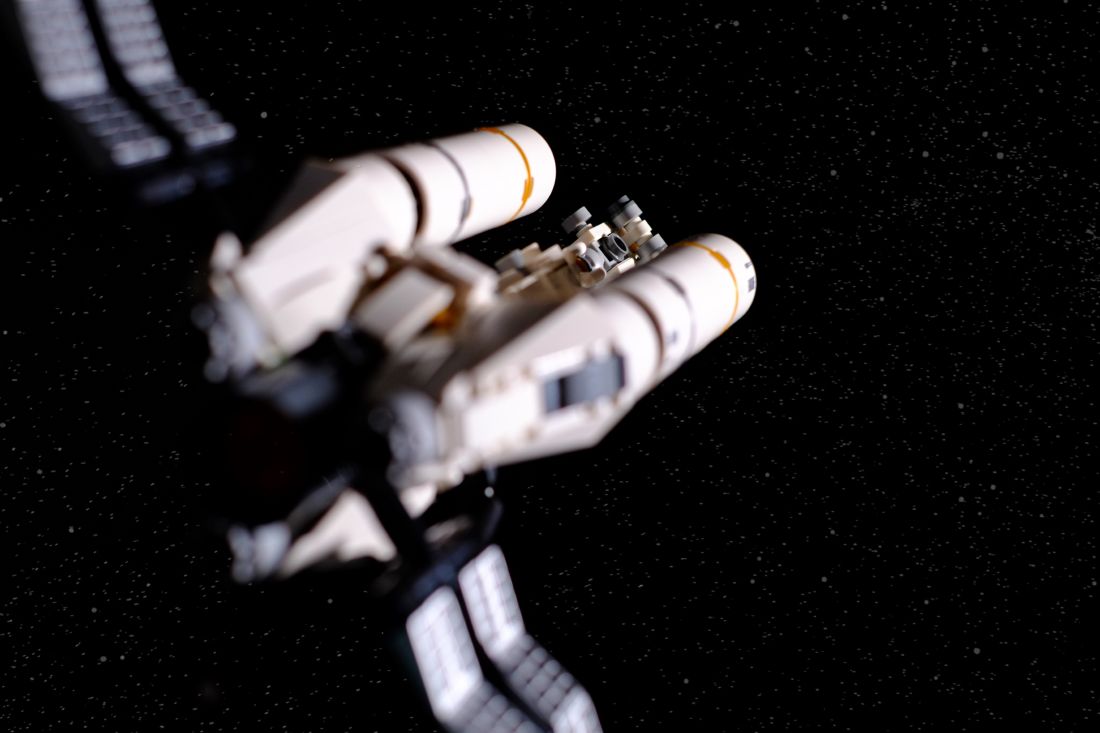
Hail Mary definitely looks far more impressive in space than sitting on its massive stand. Of course, first you have to get it there.
I’ll admit I have a weakness for shots of spacecraft suspended in the endless void of space, so naturally I spent most of my time photographing the ship itself. Thanks to the compact size of the model, it’s perfectly possible to shoot it entirely using practical backgrounds, without having to paste the vehicle onto a digital backdrop later.
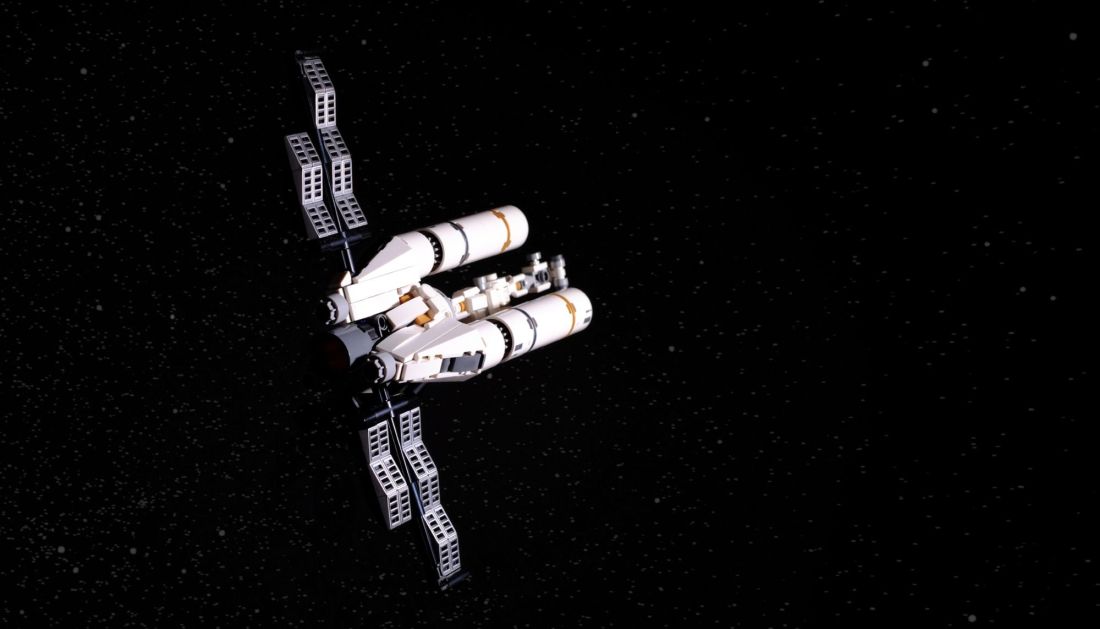
Finding the right angle — and especially the right lighting, which in space has a very specific character — turned out to be both the biggest challenge and the most fun part of the process.
The set also includes a minifigure of Dr. Ryland Grace and a brick-built representative of the Eridian species — Rocky. And while Grace’s minifigure is genuinely excellent, I do have one tiny complaint about Rocky [warning: LEGO jargon ahead!]. Personally, I would’ve preferred all three legs to use part 98313 Arm Mechanical. Instead, only two do, while the third one uses the 3171 Barb/Claw piece, which feels a little out of place to me. Still, it’s hardly the kind of issue that keeps me awake at night.
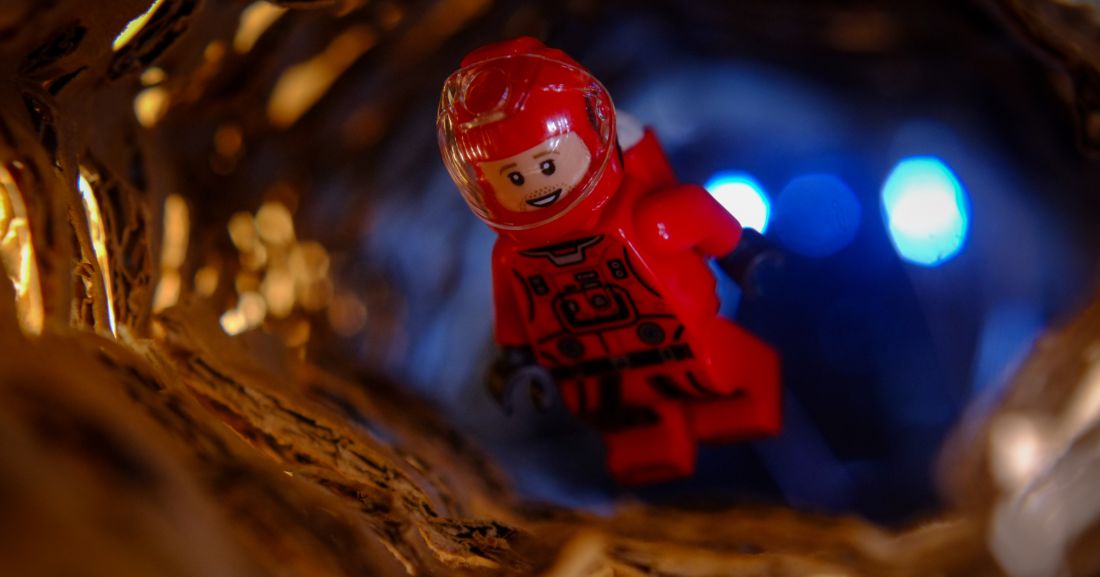
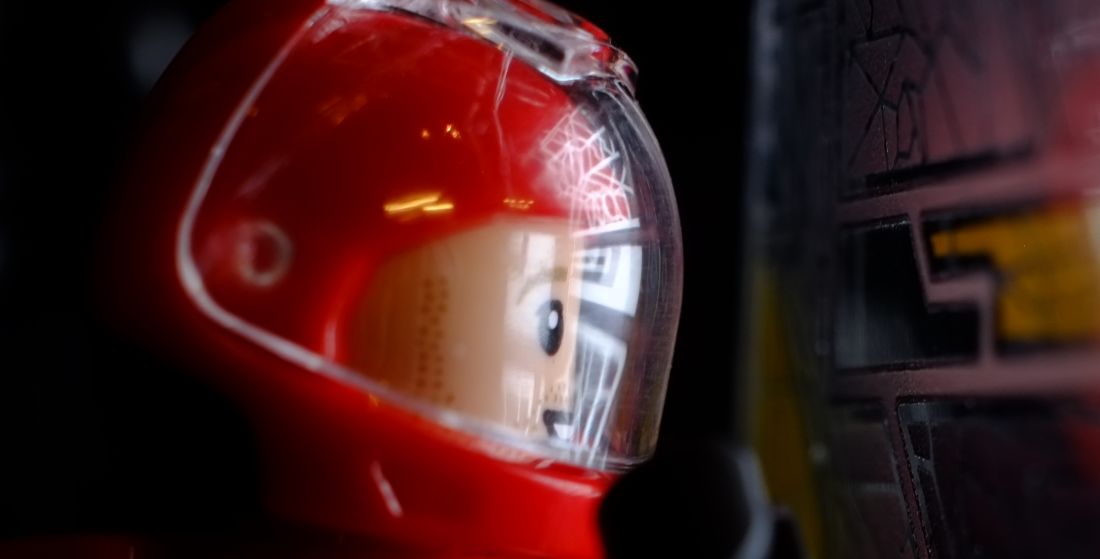
As a rule, when I want to showcase the photographic potential of a set on my blog, I avoid using parts or models from other sets — I don’t want to “cheat” the reader. That’s why all the shots with the minifigures use the ship included in the set, even though the scale technically doesn’t match.
I also enjoy incorporating everyday objects into my photos — sometimes even things only a toy photographer would notice, like the slotted cardboard inserts usually used as packing filler inside shipping boxes. In my case, that cardboard became the xenonite corridor connecting the ships of our heroes.
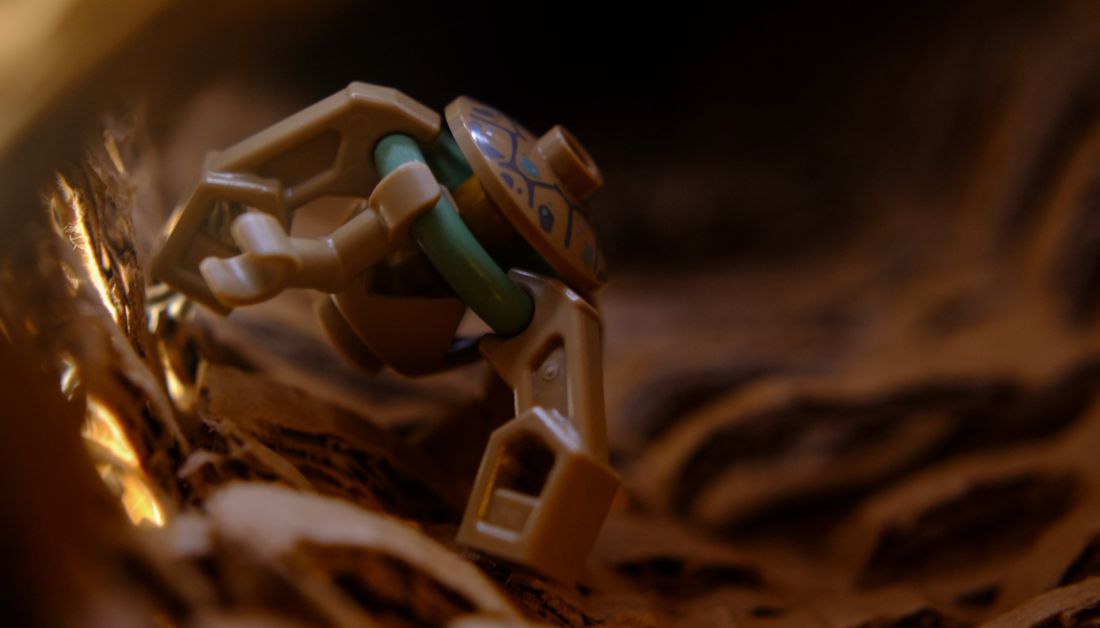

And then there’s [brace yourselves, more LEGO jargon!] the 61409 metallic silver slope, which I used as the backdrop for the scene where Rocky reaches toward the wall. The scene set on the surface of Adrian uses what’s known as a digirama as its background — essentially an image displayed on a computer screen — but the red “Petrovascope” frame with the visible astrophage was created entirely using practical effects.
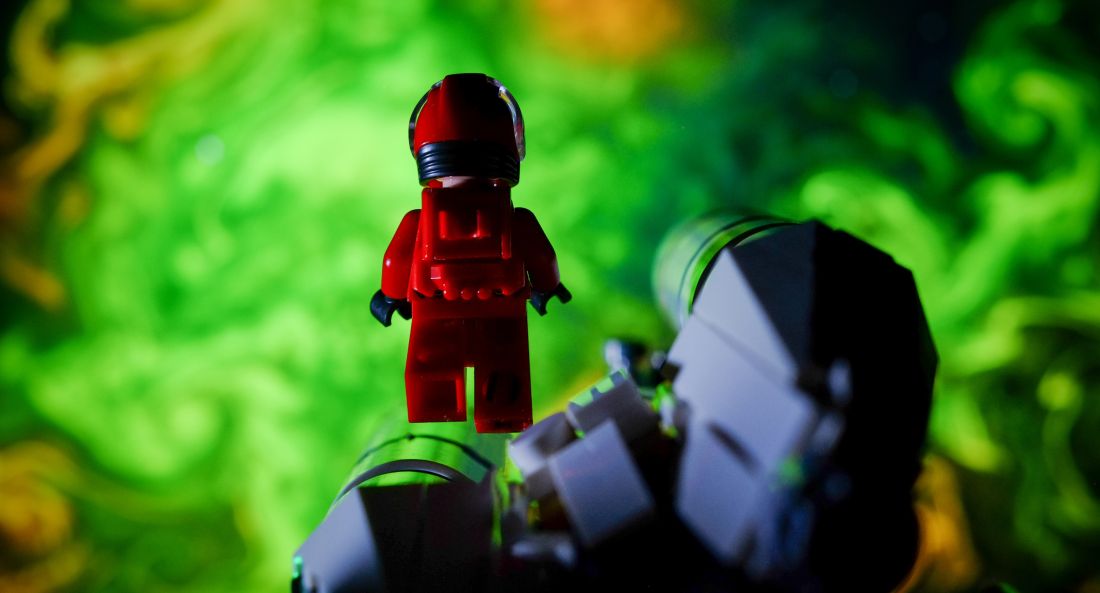

I’d seen the behind-the-scenes footage from the movie, and that sequence was also achieved using practical effects, so naturally I couldn’t allow myself to fall behind, right?

In this post I focused mainly on scenes that can be recreated directly using the contents of the set itself, but I see no reason not to expand both the figures and the build with additional LEGO elements to create entirely new scenes and interpretations.
Amaze amaze amaze
Set 11389 comes surprisingly close to deserving that slogan — especially once you go beyond its primary role as a spinning centrifugal display piece and start photographing it.
The ship’s micro-scale silhouette is captured beautifully, the minifigure is flawless, and the entire set is ridiculously photogenic. I’d tweak Rocky ever so slightly, and at this price point it would’ve been nice to also get a civilian version of Ryland’s minifigure.
But even so, this set still gets a solid thumbs down 😉
Howdy! While you’re here, we invite you to sign up for our weekly Toy Photographers email roundup, where you’ll get a recap of all the week’s babbling. And while you’re at it, you should definitely join our MeWe community! We hold monthly contests with prizes and lots of other cool stuff.




Leave A Comment